Comparison guideRepair Methods
Mudjacking vs Polyjacking: Which Is Better for Lifting a Sunken Concrete Slab?
Both methods pump material under a sunken slab and lift it back into place. They differ in weight, hole size, price and how they handle water. Here is how to choose.
Mudjacking and polyjacking are two ways to lift a sunken concrete slab, such as a driveway, sidewalk, patio, step or garage floor, without tearing it out. Mudjacking pumps a heavy cement-based slurry under the slab through drilled holes. Polyjacking injects a lightweight expanding polyurethane foam through smaller holes. Both fill the empty space under the slab and push it back up to level. This guide is part of our foundation repair methods hub, where each repair is compared on what it fixes and what it costs.
If you have a sunken walkway or a driveway with a trip edge and two quotes that use different methods, you are not alone in wondering which one is worth the money. In this guide I will explain how each method works, how they compare on weight, holes, cure time, water and cost using state transportation research, when each one fits, and when neither is the right fix.
Short answer
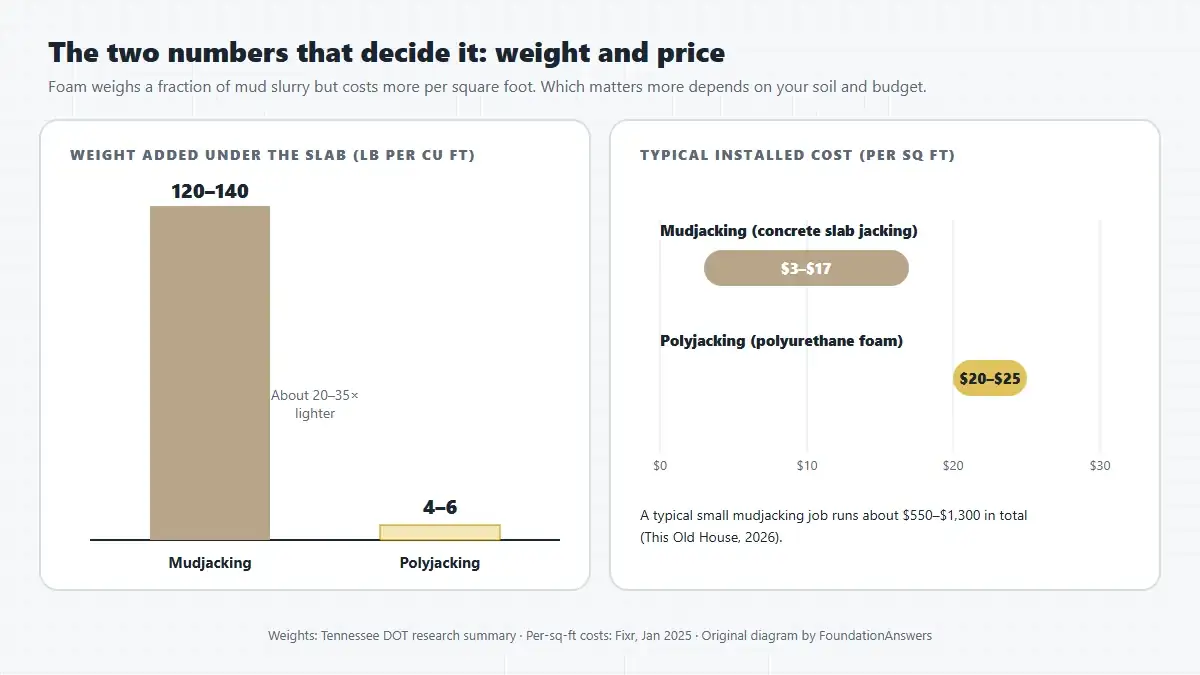
Polyjacking uses foam that weighs about 4 to 6 pounds per cubic foot, cures in minutes, needs small holes and does not soak up water, but it costs more, about $20 to $25 per square foot. Mudjacking uses slurry that weighs about 120 to 140 pounds per cubic foot and needs larger holes, but it costs less, about $3 to $17 per square foot. Choose foam for weak or wet soil and visible slabs; choose mudjacking when budget leads and the soil is firm.
Mudjacking fits
Budget, firm soil
A sunken patio or walk on stable ground, where price matters more than hole size.
Polyjacking fits
Weak or wet soil
Soft fill, water under the slab, or a visible slab where small patches matter.
Neither fits
House footing moving
Cracked walls, sticking doors or a badly broken slab. Get an engineer's assessment.
Why Do Concrete Slabs Sink?
A slab sinks when the soil under it moves away or compresses. Below I am sharing the usual causes, because the cause decides whether a lifted slab stays up.
- Poorly compacted fill: Soil placed during construction without enough compaction keeps settling under the weight of the slab, especially near the house where trenches were backfilled. This slow settlement is the most common cause of a sunken walk or patio.
- Water washing soil away: Downspouts, poor grading and leaking pipes cause erosion: they carry fine soil out from under the slab and leave a void.
- Clay that shrinks: Dry spells shrink clay soil, so the slab loses support.
- Frost and thaw: In cold climates, frozen soil lifts the slab and lets it drop unevenly when it thaws.
Our guide to settling and soil movement explains each cause in more detail.
What Is Mudjacking?
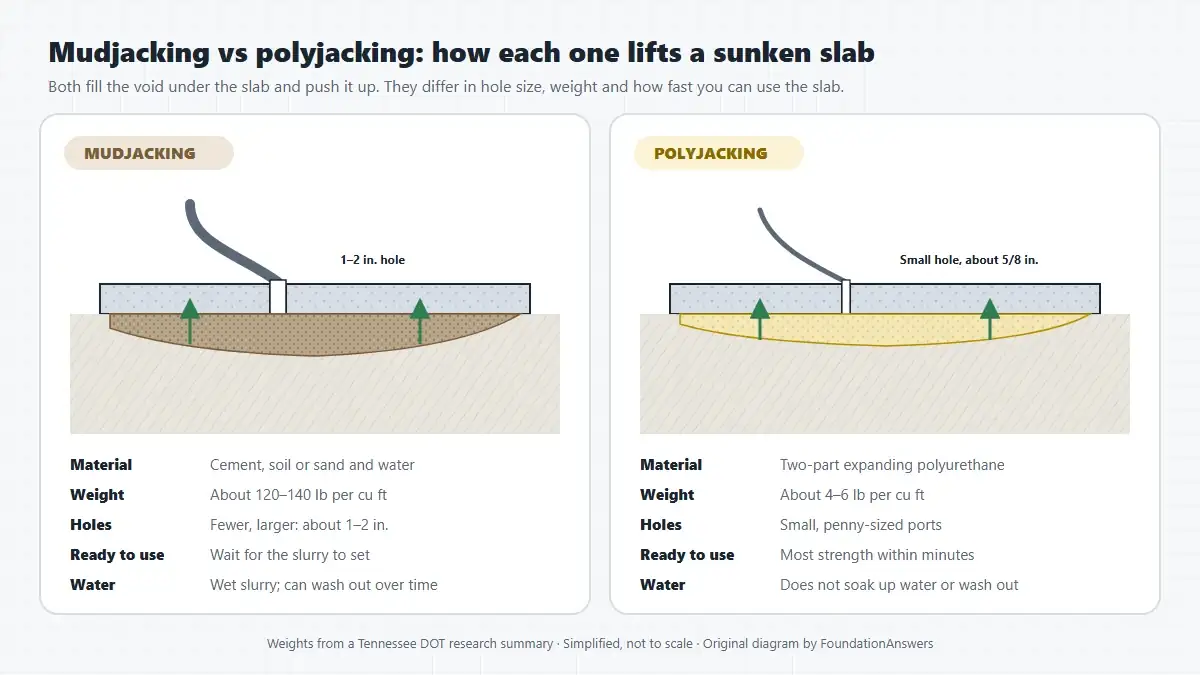
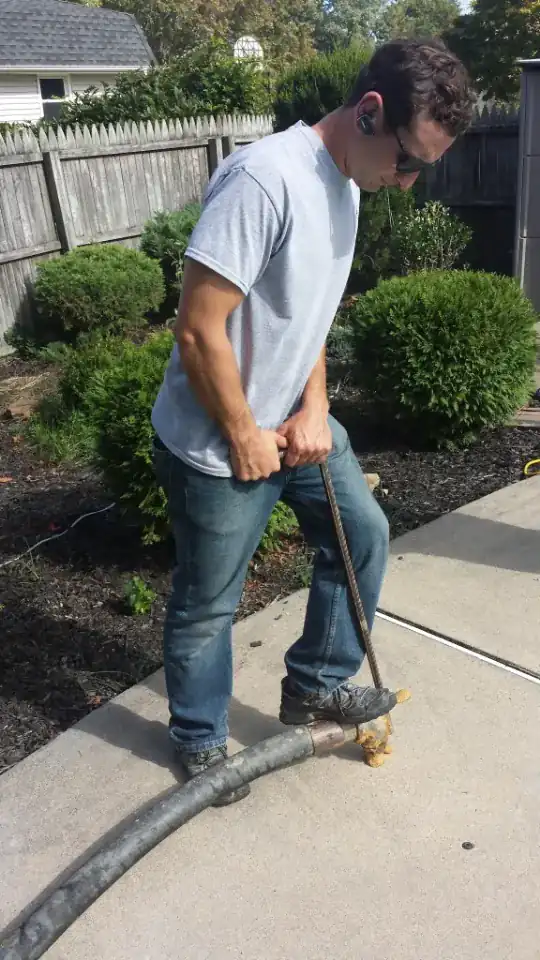
Mudjacking, also called slabjacking or concrete raising, is the older of the two methods. A crew drills holes about 1 to 2 inches across through the slab, then pumps in a slurry grout of cement, soil or sand and water. The slurry fills the void and, as more is pumped, raises the slab. The holes are then patched with cement.
The slurry is heavy. A Tennessee Department of Transportation research summary puts mudjacking and similar materials at about 120 to 140 pounds per cubic foot. On firm soil that weight is not a problem; on soft or wet soil it adds load to the very ground that let the slab sink.

What Is Polyjacking?
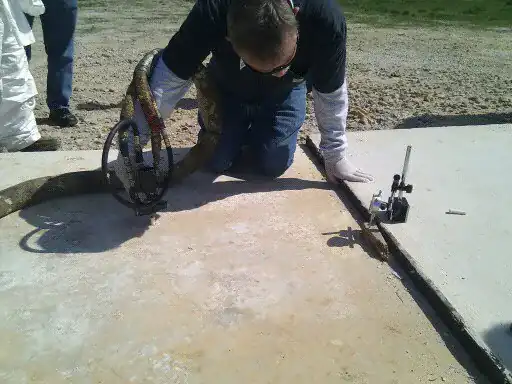
Polyjacking, also called foam jacking or polyurethane concrete lifting, injects a two-part polyurethane through small ports, often around the size of a penny. The two liquids react under the slab and expand into a rigid foam that fills the void and lifts the slab. The same Tennessee DOT summary puts this type of foam at about 4 to 6 pounds per cubic foot, so it adds far less weight to the soil.
State agencies have used injected polyurethane on highway slabs for decades. In an Oregon DOT study, the method raised a bridge approach slab to its target profile; after two years of monitoring, the slabs had settled by up to about 10.5 mm (0.4 inch), and the foam's compressive strength had not dropped after its time underground. The study also found the foam reliably flowed through openings as small as 6.4 mm (1/4 inch).

Mudjacking vs Polyjacking: Side-by-Side Comparison
Below I am explaining how the two methods compare on the points that matter most to homeowners, in a table.
| Factor | Mudjacking | Polyjacking |
|---|---|---|
| Material | Cement, soil or sand and water slurry | Two-part expanding polyurethane foam |
| Weight added | About 120–140 lb per cu ft | About 4–6 lb per cu ft |
| Hole size | About 1–2 in., fewer holes | Small ports, around penny-sized |
| Ready to use | Usually within hours to a day, once the slurry firms up | Usually within minutes to an hour |
| Water | Wet slurry can lose fines or wash out if water keeps flowing under the slab | Does not absorb water or wash out |
| Cost (installed) | About $3–$17 per sq ft | About $20–$25 per sq ft |
| Cleanup | More mess on site | Less mess; foam can stain if spilled |
| Installer skill | Widely available | Needs trained installers and the right equipment |
As the table shows, mudjacking wins on price and polyjacking wins on almost everything else: weight, hole size, speed and resistance to water. The question is whether those advantages are worth the extra cost for your slab.
How Much Do Mudjacking and Polyjacking Cost?
Cost depends on the area, how far the slab has to rise and how big the void is. You can estimate a job with this formula:
Estimated cost = slab area (sq ft) × cost per sq ft for the method
Example: Suppose a 10 × 12 foot patio (120 sq ft) has sunk 2 inches at one corner. Using Fixr's ranges, mudjacking works out to about 120 × $3–$17 = $360–$2,040, and polyjacking to about 120 × $20–$25 = $2,400–$3,000. This Old House puts a typical mudjacking job at $550–$1,300 in total, which sits inside that range. Compare that with replacing the patio before you decide.
As a rule, the bigger the void, the more material the job needs, and foam's higher price per pound adds up faster than slurry. Ask each contractor how they price: by square foot, by the pound of foam, or by the job.
So, Which Is Better: Mudjacking or Polyjacking?
Neither method is better for every slab. Below I am sharing how the choice usually works out.
- Choose polyjacking if the soil is soft, wet or prone to washing out, because the light foam adds little load and resists water.
- Choose polyjacking for a front walk, steps or decorative slab where small, few patches matter.
- Choose polyjacking when you need the slab back in use the same day, such as a busy driveway.
- Choose mudjacking for a large, plain slab on firm soil when price is the main concern.
- Skip both if the slab is badly broken into many pieces; replacement is usually the better value.
- Skip both if the house foundation itself is moving; that needs an engineer and usually piers.
- Skip both until the cause of the void is fixed, or the slab will sink again.
The glossary entries for polyjacking and mudjacking give short definitions you can share with anyone comparing quotes.
Common Mistakes to Avoid When Leveling a Slab
- Lifting without fixing the water: A downspout or leak that washed out the soil will do it again. Fix drainage first.
- Choosing on price alone: On soft or wet soil, cheaper slurry can add weight and settle again, costing more in the long run.
- Using slab lifting on a moving house foundation: Foam under a garage slab does not stop a settling footing.
- Over-lifting: Too much pressure cracks the slab or lifts it unevenly. Good crews lift slowly and watch the slab edges.
- Ignoring the joints: After lifting, seal the joint between the slab and the house so water stays out.
- Skipping the warranty question: Ask what happens if the slab settles again within a year or two.
Conclusion
Mudjacking and polyjacking both lift a sunken slab by filling the void underneath. Mudjacking is cheaper but heavier and needs bigger holes; polyjacking costs more but weighs a fraction as much, cures in minutes and resists water. Fix the cause of the sinking first, choose foam for weak or wet soil and visible slabs, and choose mudjacking for plain slabs on firm ground. For a house foundation that is moving, get an engineer instead. For more help, browse our independent comparisons of concrete and foundation repairs.
Frequently Asked Questions
-
How long does mudjacking or polyjacking last?
There is no fixed lifespan, because the result depends on the soil under the slab. If water keeps washing soil away or the ground keeps compressing, any lifted slab can sink again. In Oregon DOT's two-year monitoring of a foam-lifted bridge approach slab, the slabs settled up to about 0.4 inch and the foam kept its strength. Fix drainage first to make either method last.
-
How much does mudjacking cost compared with polyjacking?
Mudjacking is usually cheaper. Fixr's data puts concrete slab jacking at about $3 to $17 per square foot and polyurethane foam leveling at about $20 to $25 per square foot. This Old House puts a typical mudjacking job at about $550 to $1,300 in total. Small jobs often cost more per square foot because of setup time.
-
Can you do your own mudjacking?
Small DIY attempts are possible with rented equipment, but they are hard to do well. Lifting a slab evenly takes controlled pressure, the right mix and the right hole pattern; too much pressure can crack the slab or lift it unevenly. Polyurethane systems need trained installers and proper protective equipment. For driveways and steps, a professional is the safer choice.
-
Can mudjacking or polyjacking fix a house foundation?
They lift and fill under slabs, such as driveways, patios, sidewalks, steps, garage floors and some interior slabs. They do not fix a house footing that keeps settling into weak soil, which usually needs piers or underpinning designed by an engineer. If doors stick and walls crack, get the foundation assessed before anyone injects anything.
-
Will the drill holes show after the repair?
Yes, but they are patched. Mudjacking holes are larger, about 1 to 2 inches across, while polyjacking ports are about the size of a penny. Both are filled with a cement patch, which rarely matches old concrete exactly. Polyjacking leaves fewer and smaller patches, which matters on a front walk or decorative slab.
-
What if the slab sinks again after leveling?
It can usually be lifted again by injecting through new or reopened holes. More important is finding out why it sank: a leaking downspout, poor grading, a broken pipe or soft fill under the slab. Ask the contractor what caused the void and what their warranty covers if the slab settles again.
Sources and Standards
- Tennessee Department of Transportation and University of Tennessee at Chattanooga, Improving rigid pavement smoothness using PolyLevel (research summary RES2016-18 and final report, May 2018).
- S. Soltesz, Oregon Department of Transportation, Injected polyurethane slab jacking: final report, FHWA-OR-RD-02-19, June 2002, and interim report, 2000.
- Fixr, Concrete leveling cost, updated January 2025.
- This Old House, Foundation repair cost (mudjacking), updated October 2026.
- Wikipedia, Concrete leveling (overview of hole sizes and materials).
This guide is general information and does not replace an on-site inspection by a qualified professional. Read our disclaimer.