Mold in a basement is fungal growth on basement walls, floors, stored items or framing, fed by moisture that the space cannot get rid of. It shows up as gray, green, black or white patches, often with a musty smell, and it grows on anything with paper, wood, fabric or dust on it. Basements are a common place for it because they sit in cool, damp ground and get less air movement than the rest of the house.
If you just found fuzzy spots on the bottom of a basement wall or on boxes stored on the floor, you are not alone in wondering whether it is dangerous and whether you can clean it yourself. The answer depends on how big the patch is and where the moisture comes from. In this guide I will explain why basement mold grows, how to tell it apart from white mineral deposits, what the health risks are, how much you can safely clean yourself, what professional removal costs, and how to keep it from coming back.
Short answer
Fix the moisture first: a leak, groundwater, or humid summer air condensing on cool walls. Then judge the size. The US EPA says you can usually clean an area under about 10 square feet yourself with detergent and water, gloves, goggles and an N-95 respirator. Larger areas call for containment or a professional; Fixr puts a basement job at about $1,500 to $4,000. Keep humidity between 30% and 50% afterwards.
Clean it yourself
Under about 10 sq ft
A small patch on a hard surface, a known and fixed moisture source, no one with asthma.
Contain it
10 to 100 sq ft
Seal the area with plastic sheeting, and consider a professional.
Hire a pro
Over 100 sq ft
Or sewage water, hidden mold inside walls, or mold that keeps coming back.
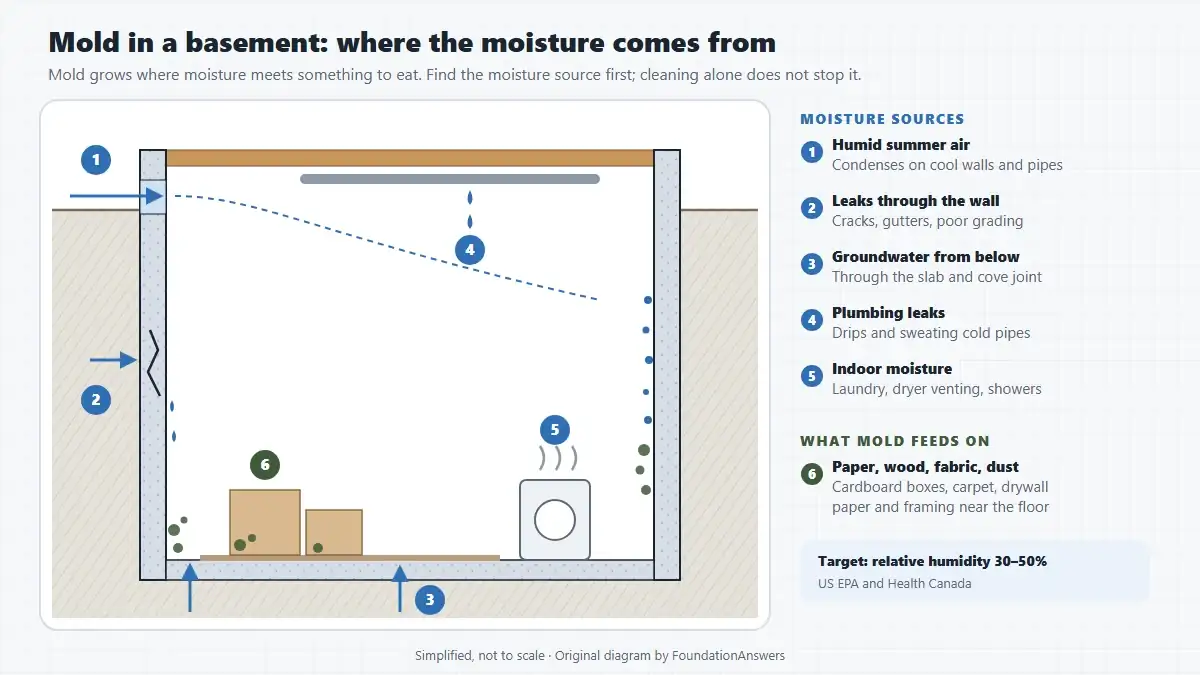
Why Does Mold Grow in a Basement?
Mold needs three things: moisture, something to eat and a temperature people also find comfortable. A basement supplies all three. The US EPA puts it simply: the key to mold control is moisture control. Below I am sharing the five usual moisture sources in a basement.
- Humid summer air: Warm outdoor air enters the basement, meets walls and pipes cooled by the ground, and leaves water on them. This is the most common cause of mold on the bottom of basement walls with no leak at all.
- Leaks through the wall: Rain from overflowing gutters or soil that slopes toward the house gets in through cracks, tie holes and window wells.
- Groundwater from below: Water under pressure rises through the slab or the joint where the wall meets the floor, especially after heavy rain.
- Plumbing leaks: Slow drips from supply lines, drains and water heaters, and cold water pipes that sweat in summer.
- Indoor moisture: Laundry hung to dry, a dryer vented into the basement, or a basement shower without a working fan.
Mold feeds on the paper face of drywall, wood framing, carpet, cardboard boxes and even household dust. That is why mold so often starts behind stored boxes, under carpet and along the bottom of finished walls.
How Humid Air Turns Into Water on Basement Walls
Air holds water as invisible vapor. When it cools to its dew point, that vapor turns into liquid water on the coolest surface it touches. In a basement, the coolest surfaces are the foundation walls, the floor slab and cold water pipes.
Example: Suppose summer air at 75°F and 60% relative humidity reaches your basement. Its dew point is about 60°F, so any wall or pipe colder than about 60°F collects water. Dry the same air to 50% relative humidity and the dew point drops to about 55°F, so far fewer surfaces get wet. That is why a dehumidifier often stops basement mold that cleaning alone never did.
Opening basement windows in summer usually makes this worse, because it brings in more warm, humid air. Health Canada advises running a dehumidifier with the windows closed when the basement is damp, when water condenses on cold surfaces or when humidity is above 50%.
Is It Mold or Efflorescence?
Many homeowners panic over white, fuzzy-looking deposits on concrete or block walls that are not mold at all. Efflorescence is a crust of mineral salts left behind when water moves through masonry and dries on the surface. Below I am sharing how to tell the two apart in a table.
| Check | Mold | Efflorescence |
|---|---|---|
| Where it grows | Drywall, wood, carpet, boxes, dusty paint | Bare concrete, block, brick and mortar |
| Color | Gray, green, black, white or orange | White, sometimes grayish |
| Texture | Fuzzy, slimy or spotted; smears when wiped | Crystalline or powdery; crumbles when rubbed |
| Smell | Musty or earthy | No smell |
| Pattern | Spots and colonies that spread | Lines and patches where water seeps through |
| What it means | Ongoing moisture plus food; clean it up | Water is passing through the wall |
As the table shows, efflorescence is not a health risk, but it is a sign that water is moving through the wall. It does not need a mold remover; it needs the water path fixed. Both can appear on the same wall, so look closely at each patch.
Is Basement Mold Dangerous to Your Health?
Basement mold is a health concern, though rarely an emergency. The CDC says mold can cause a stuffy nose, wheezing, and red or itchy eyes or skin. People with mold allergies, asthma, chronic lung disease or weak immune systems can have more serious reactions. Air from a basement also travels up into the living space through stairwells, ducts and gaps around pipes.
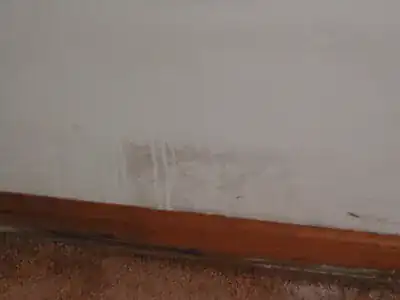

The color of the mold does not tell you how dangerous it is. The CDC says you do not need to identify the type of mold, because every type is handled the same way. For the same reason, testing is rarely worth the money. The EPA says sampling is usually unnecessary when you can see mold, and there are no federal limits to compare results against.
How Much Basement Mold Can You Clean Yourself?
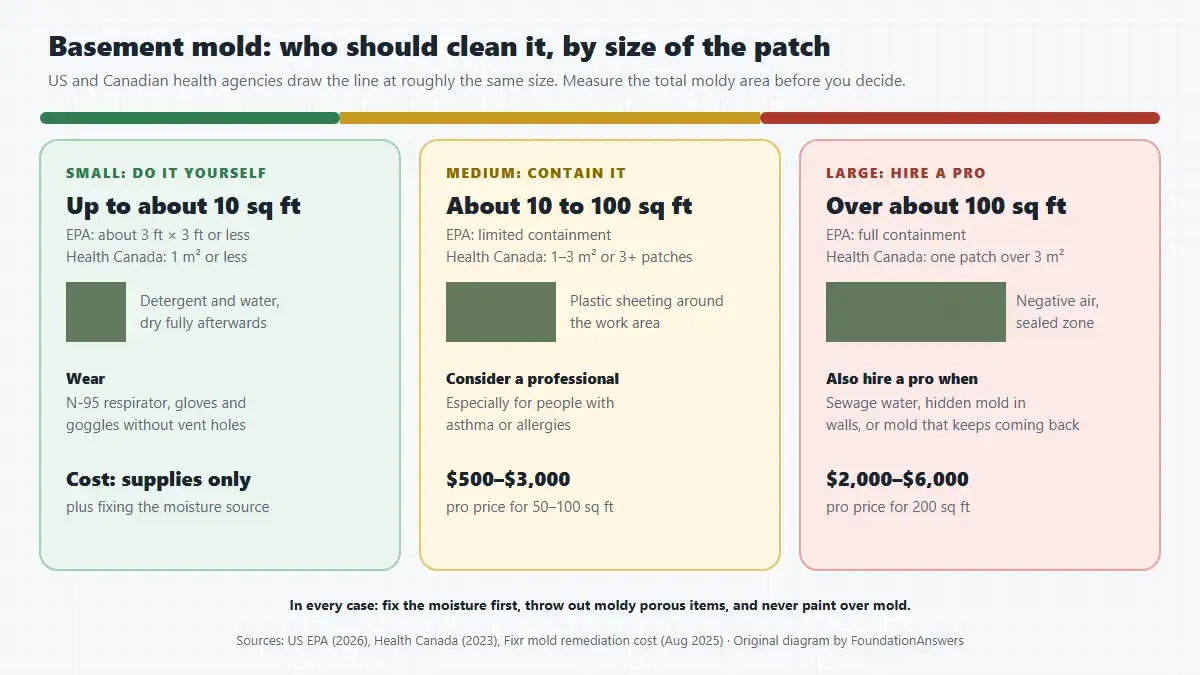
The size of the moldy area decides who should clean it. Below I am sharing the thresholds from US and Canadian health agencies in a table.
| Size of moldy area | US EPA | Health Canada | Who cleans it |
|---|---|---|---|
| Up to about 10 sq ft | Usually a homeowner job | Small: 1 m² (about 11 sq ft) or less | You, with protective gear |
| About 10–100 sq ft | Limited containment | Medium: 1–3 m², or more than three patches | You with care, or a professional |
| Over about 100 sq ft | Full containment | Large: one patch over 3 m² | A professional |
As the table shows, both agencies draw the do-it-yourself line at roughly 10 square feet, which is a patch about 3 feet by 3 feet. Add up every patch in the basement, including the small ones. Health Canada also advises a professional when the water was contaminated with sewage, when mold is hidden inside walls or when it keeps returning after cleaning.
How to Remove Mold From a Basement Safely
For a small area on a surface you can reach, below I am sharing the steps in order.
- Fix the moisture: Stop the leak, correct the drainage or start a dehumidifier. Mold cleaned off a wet wall grows back.
- Protect yourself: Wear an N-95 respirator, long gloves and goggles, as the EPA advises. Keep children, pets and anyone with asthma out of the area.
- Remove what cannot be cleaned: Bag and throw out moldy cardboard, carpet, ceiling tiles and soft materials. The EPA notes that mold can be difficult or impossible to remove from porous materials.
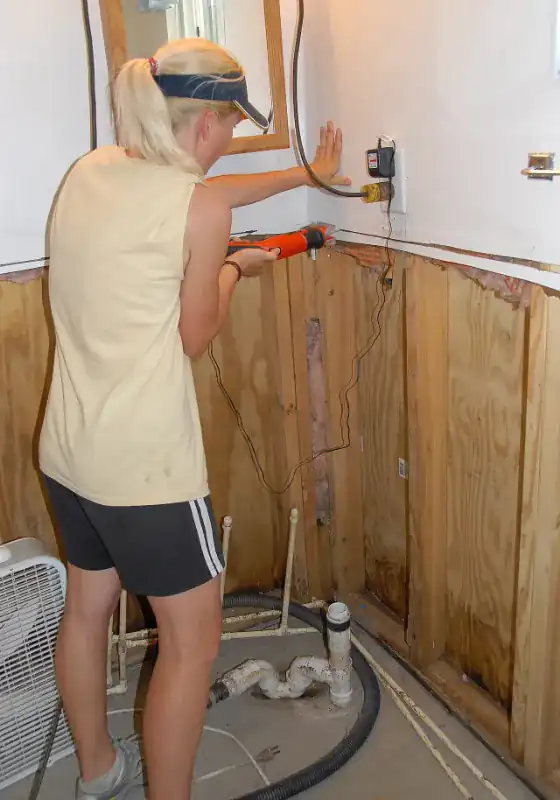
- Cut out wet drywall: Drywall that stayed wet or grew mold on its paper face usually needs replacing. Cut above the damage and let the wall cavity dry.
- Scrub hard surfaces: Clean concrete, block, metal and sealed wood with detergent and water, then dry them completely.
- Skip the bleach: Health Canada says not to use bleach on mold, and the EPA does not recommend it as a routine step. Never mix bleach with ammonia.
- Do not paint over mold: Paint over a moldy surface peels and does not stop the growth. Clean and dry first.

Our guide to crawl space mold covers the same steps for the tighter space under a house, including the containment rules for larger areas.
Basement Mold Removal Cost
Professional removal is priced by area and by how much material has to come out. Below I am sharing typical national prices in a table.
| Item | Typical cost |
|---|---|
| Basement mold remediation | $1,500–$4,000 |
| Per square foot | $10–$30 |
| 100 sq ft area | $1,000–$3,000 |
| 200 sq ft area | $2,000–$6,000 |
| Mold inside walls | $1,000–$12,000 |
| Mold inspection | $450–$800 |
| National average, any room | $3,500 |
As the table shows, the area sets most of the price, and mold hidden inside finished walls is the expensive surprise. All figures come from Fixr's mold remediation guide, updated in August 2025. A quote that skips the moisture source is only half a job: if water is getting in, see what basement waterproofing costs before you pay for cleanup twice.
How to Keep Mold Out of Your Basement
Prevention costs far less than removal. Below I am sharing the steps that keep a basement dry enough to stay mold-free.
- Hold humidity at 30–50%: The EPA and Health Canada both give this range. A cheap hygrometer tells you where you stand.
- Run a dehumidifier in summer: Keep the windows closed while it runs, and drain it to a floor drain or sump so it never stops when full.
- Send rainwater away: Clean gutters, extend downspouts and keep soil sloping away from the walls.
- Insulate cold pipes: Pipe insulation stops cold water lines from sweating.
- Vent the dryer outdoors: And run the bathroom fan during and after showers.
- Store smart: Use plastic bins with lids and keep them off the floor. Health Canada advises never placing cardboard boxes directly on a basement floor.
- Rethink carpet: Carpet on a basement slab holds moisture. Health Canada suggests considering its removal.
So, What Should You Do About Basement Mold?
The right next step depends on what you found.
- If it is white, crusty and on bare concrete: It is probably efflorescence. Find where water passes through the wall.
- If it is a small patch with a clear cause: Fix the cause, then clean it yourself with protective gear.
- If it keeps coming back on walls with no leak: Measure the humidity. Summer condensation is the likely cause, and a dehumidifier is the fix.
- If it covers a large area or sits inside finished walls: Get a remediation quote and a plan for the moisture source in the same visit.
- If you are buying the house: Treat basement mold as evidence of a moisture problem, and price the moisture fix as well as the cleanup.
Common Mistakes to Avoid With Basement Mold
- Cleaning without fixing the water: The mold grows back on the same damp surface.
- Bleaching and painting: Bleach does not solve the moisture, and paint over mold peels.
- Opening windows in summer: Humid outdoor air adds moisture to a cool basement.
- Paying for tests first: Visible mold needs removing whatever its type.
- Finishing a damp basement: Drywall and carpet over a damp slab or wall give mold a hidden place to grow.
Conclusion
Mold in a basement is a sign of a moisture problem. Find the source first: a leak, groundwater or humid summer air condensing on cool walls. Clean small patches yourself with detergent, water and protective gear; contain medium areas; and hire a professional for anything over about 100 square feet, hidden mold or sewage water, which typically costs $1,500 to $4,000 for a basement. Then keep humidity at 30 to 50% so it does not return. For the rest of our guides, browse our independent guidance on damp, mold and moisture.
Frequently Asked Questions
-
Is it safe to be in a basement with mold?
For most healthy adults, short visits to a basement with a small patch of mold cause no lasting harm. The CDC says mold can cause a stuffy nose, wheezing and itchy eyes or skin, and people with asthma, allergies or weak immune systems face more risk. Keep vulnerable people out of the area, and do not sleep in a moldy basement until the moisture is fixed and the mold is cleaned up.
-
Can mold in the basement make you sick?
Yes, it can. The CDC lists a stuffy nose, wheezing, and red or itchy eyes or skin as common reactions, and more serious reactions in people with allergies, asthma, lung disease or weak immune systems. Air from a basement also moves into the rest of the house. If anyone has symptoms that improve when they leave home, talk to a doctor and deal with the mold.
-
What kills mold in a basement?
Scrubbing with detergent and water, then drying the surface completely, is what the US EPA recommends for hard surfaces. Health Canada advises against bleach for mold cleanup, and the EPA does not recommend it as a routine step. Killing mold matters less than removing it and fixing the moisture, because dead mold can still cause allergic reactions.
-
Will homeowners insurance cover mold in the basement?
Only sometimes. Policies usually pay for mold caused by a sudden, accidental water event, such as a burst pipe, and exclude mold from long-term leaks, high humidity, flooding or poor maintenance. Policygenius reports that many insurers cap mold payouts at about $10,000. Read your own policy and report sudden water damage quickly.
-
Is black mold in a basement more dangerous?
Not because of its color. Many molds look black, and the CDC says you do not need to know the type of mold to deal with it, because all molds are removed the same way. Stachybotrys chartarum is the mold people usually mean by black mold. Treat any mold the same way: fix the moisture, clean or remove it safely, and keep the humidity low.
-
Do I need a mold test for my basement?
Usually not. The CDC does not recommend routine sampling, and the EPA says sampling is usually unnecessary when you can see the mold. There are no federal limits for mold or spores to compare results against. Testing makes sense mainly when you smell mold but cannot find it, or when a lawyer, insurer or doctor asks for it.
Sources and Standards
- US EPA, A Brief Guide to Mold, Moisture and Your Home, updated February 18, 2026.
- US EPA, What are the basic mold cleanup steps?, updated January 14, 2026.
- US EPA, Mold remediation in schools and commercial buildings, chapter 3, updated April 2026.
- Health Canada, Guide to addressing moisture and mould indoors, January 2023.
- CDC, About mold and your health, September 2024.
- Fixr, Mold remediation cost, updated August 29, 2025.
- Policygenius, Does homeowners insurance cover mold?, updated May 2022.