Diagnosis guideBasement Water
Sump Pump Not Working: How to Find the Cause and Fix It Safely
Most sump pump failures come down to power, the float switch, a clog or a bad check valve. Here is the order to check them, what each symptom means, and when to replace the pump.
A sump pump is an electric pump that sits in a pit in your basement or crawl space floor and pumps out groundwater that collects there, so the water does not rise into the house. When it stops working, the pit fills, and the next heavy rain can flood the basement. This guide is part of our basement water hub, where every leak is traced to its source before any repair is priced.
If your pump has gone silent, hums without moving water or runs all day, you are not alone, and it is often a fix you can make in an hour. Most failures come down to the power, the float switch, a clog or the check valve, not a dead motor. In this guide I will explain how a sump pump system works, the order to check it safely, what each symptom means, how to test the pump the way NDSU Extension engineers recommend, what repairs and replacements cost, and when to replace the pump instead of fixing it.
Short answer
Check the power first: the plug, a tripped GFCI outlet and the breaker. Then make sure the float switch can rise freely, clear debris from the pit and intake, and check that the discharge pipe outside is not frozen or blocked. If water falls back into the pit after each cycle, the check valve has failed. Fixr puts a typical repair at $150 to $500 and a replacement at $350 to $1,000.
Quick fix
Power or float
A tripped outlet, an unplugged cord, or a float caught on the pit wall or cord.
Repair
Clog, valve or pipe
A clogged intake, a failed check valve, or a frozen or crushed discharge line.
Replace
Old or burned-out pump
A pump around 10 years old, or one that hums, overheats or trips the outlet.
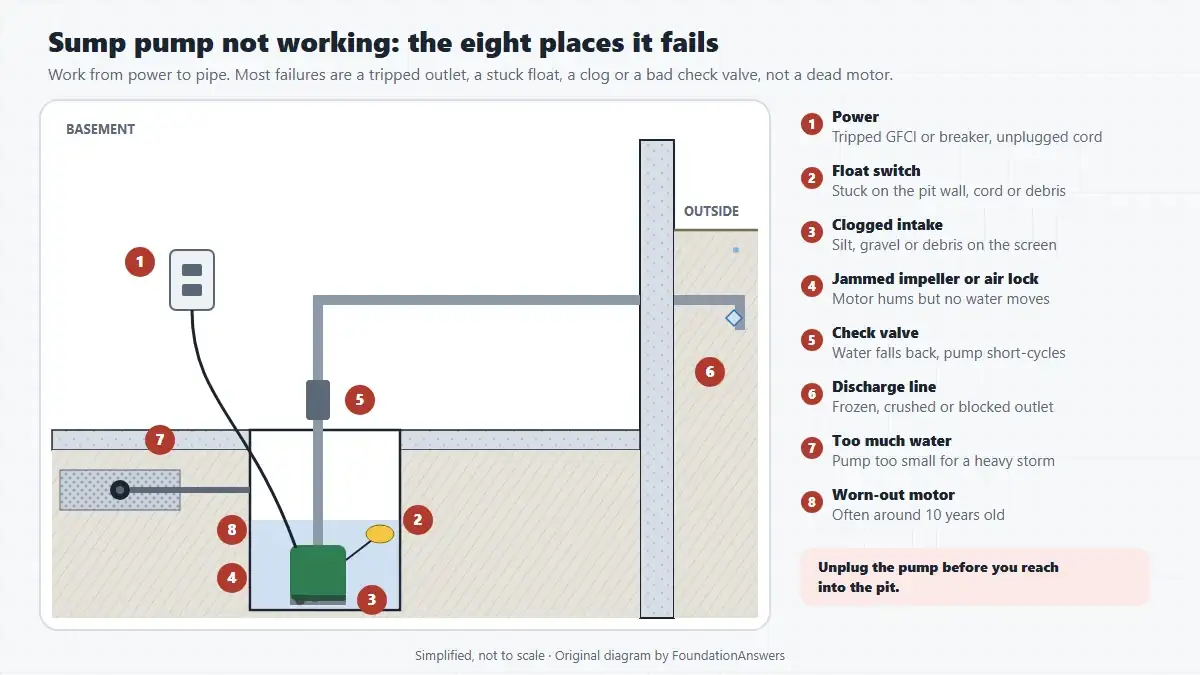
How Does a Sump Pump System Work?
A sump pump is the last part of a drainage system. Below I am explaining each part, because a fault in any one of them stops the whole system.
- Drain pipes: Perforated pipes around the footings or under the floor carry groundwater to the pit.
- Sump pit: A basin set into the floor where the water collects.
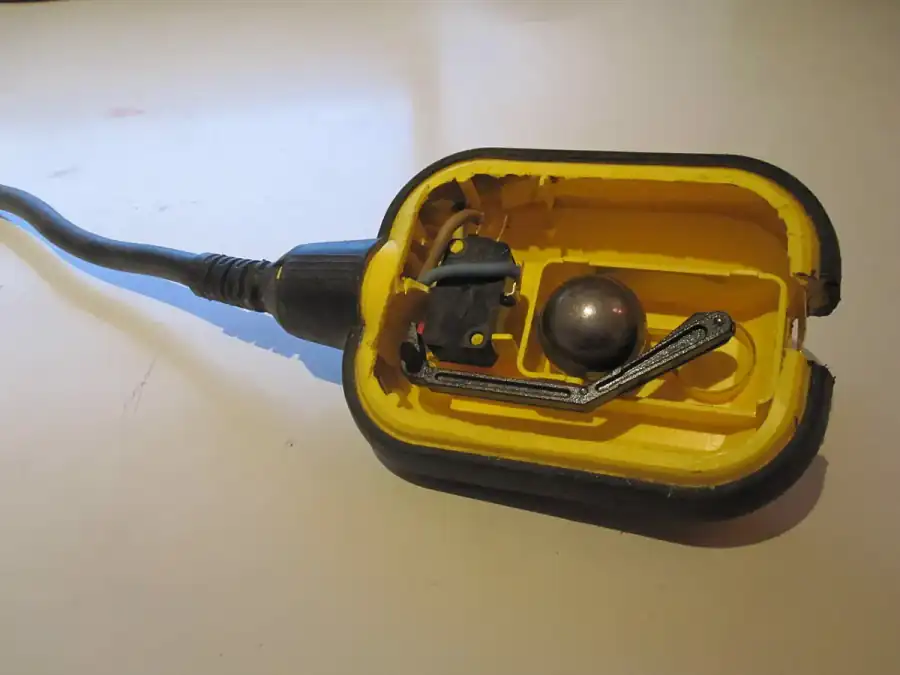
- Float switch: A float that rises with the water and turns the pump on, then drops and turns it off.
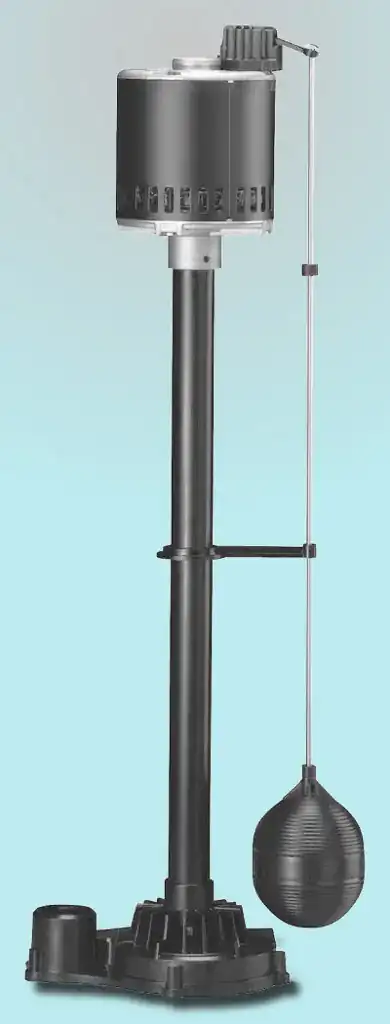
- Pump and impeller: The motor spins an impeller that pushes water up the discharge pipe. Submersible pumps sit in the water; pedestal pumps keep the motor above the pit on a column.
- Check valve: A one-way valve on the discharge pipe that stops pumped water falling back into the pit. NDSU Extension says both pump types should have one.
- Discharge line: The pipe that carries water out of the house and away from the foundation.

Safety First: Before You Touch a Sump Pump
A sump pump sits in water and runs on household current, so a few rules matter more than speed.
- Unplug before you reach in: Never put your hands in the pit or on the pump while it is plugged in.
- Stay out of standing water near power: If the basement floor is flooded around outlets or the panel, do not walk in. Call the utility or an electrician.
- Keep the pump plugged into its own outlet: Do not run it on a long extension cord.
- Move water by hand if needed: While you troubleshoot in a storm, a wet vacuum or bucket keeps the pit from overflowing.
Why Is My Sump Pump Not Working? Check It in This Order
Work from the cheapest and safest checks to the hardest. Below I am sharing the order I recommend.
- Power: Make sure the pump is plugged in. Press the reset button on a GFCI outlet, and check the breaker panel for a tripped breaker.
- Float switch: Look for a float caught on the pit wall, the power cord or the discharge pipe. Lift it gently with a stick or by its rod. If the pump starts, the switch works and the float was stuck.
- Piggyback switch: Many pumps plug into a separate float switch plug. Unplug that and plug the pump straight into the outlet for a few seconds. If the pump runs, the switch has failed.
- Pit and intake: Unplug the pump, then clear silt, gravel and debris from the pit and the intake screen.
- Check valve: Watch the pit after a cycle. If water rushes back down the pipe and refills the pit, the check valve has failed.
- Discharge line: Go outside and look at the end of the pipe. Ice, leaves, a crushed hose or a buried outlet stop the water.
- The pump itself: If it hums but moves no water, the impeller may be jammed or air-locked. If it does nothing with power and a free float, the motor or built-in switch has failed.

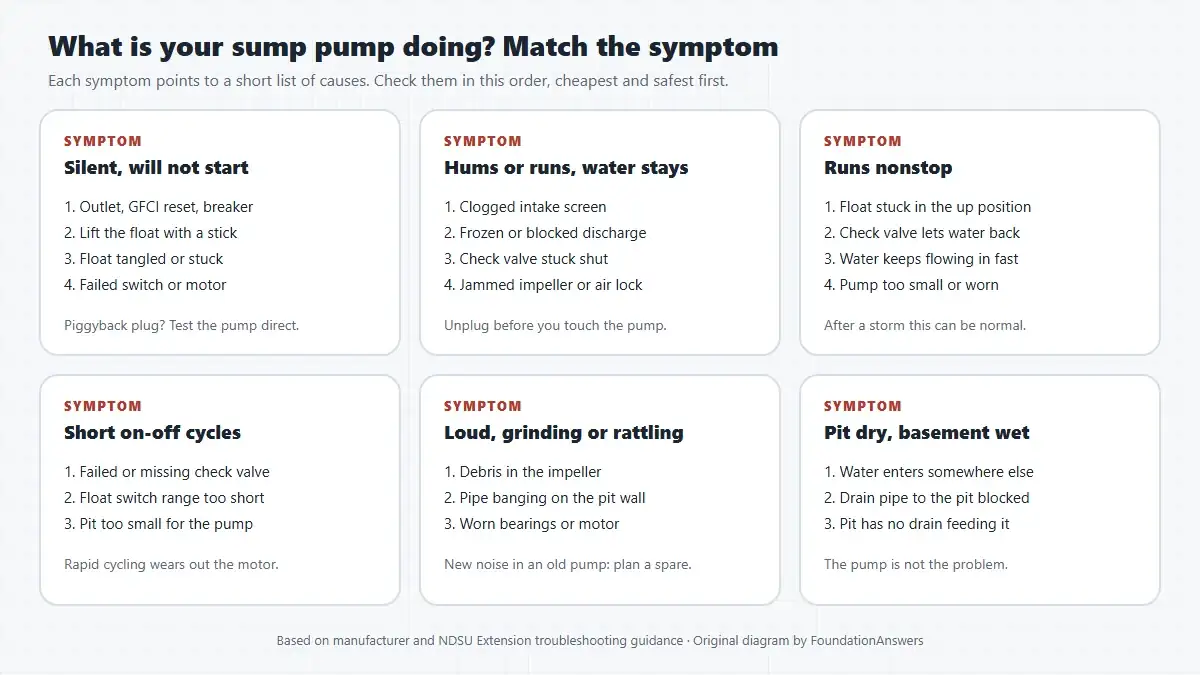
Sump Pump Symptoms and What They Mean
What the pump does tells you where to look. Below I am sharing the common symptoms, their likely causes and the fix in a table.
| Symptom | Likely cause | Fix |
|---|---|---|
| Silent, will not start | No power, stuck float, failed switch | Reset GFCI or breaker, free the float, replace the switch |
| Hums but moves no water | Jammed impeller, air lock, clogged intake | Unplug, clear debris, check the air relief hole |
| Runs but water stays high | Frozen or blocked discharge, stuck check valve | Clear the outlet, thaw the line, replace the valve |
| Runs nonstop | Float stuck up, failed check valve, heavy inflow | Free the float, replace the valve; add capacity if inflow is high |
| Short on-off cycles | Failed check valve, short float range, small pit | Replace the valve, adjust the switch, consider a larger pit |
| Grinding or rattling | Debris in the impeller, worn bearings | Clean the impeller; replace an old pump |
| Trips the GFCI or breaker | Electrical fault in the pump or cord | Stop resetting it; replace the pump or call an electrician |
| Pit dry, basement wet | Water enters elsewhere, blocked drain to the pit | Trace the leak; the pump is not the problem |
As the table shows, only a few symptoms point to the pump itself. The rest are about the parts around it, which are cheaper to fix. A GFCI that keeps tripping is the one to take seriously, because it is a safety device reporting a fault.
How to Test a Sump Pump
NDSU Extension agricultural engineers recommend a simple check before each wet season. Below I am sharing their steps.
- Check the outlet pipe outside: Make sure the discharge pipe is not plugged and that it sends water away from the house.
- Check the power: Make sure the pump is plugged in.
- Look into the pit: Remove the lid and use a flashlight to check for anything that could plug the pump.
- Lift the float: In a dry pit, lift the float for about 10 seconds to see whether the pump starts and runs smoothly, then lower it slowly.
- Pour in water: Fill the pit at about the rate water normally enters until the float starts the pump. Watch the float and listen to the pump.
- Watch two cycles: Make sure the pump turns on and off at least twice.
Example: Suppose you pour water in, the pump starts, empties the pit and stops, and then the pit refills by a few inches within seconds with no rain. That water came back down the discharge pipe, so the check valve has failed. The pump will keep pumping the same water, cycle on and off far too often and wear out early. A new check valve is a small part; leaving it costs you the pump.
Sump Pump Repair and Replacement Cost
Below I am sharing typical national prices for sump pump work in a table.
| Job | Typical cost |
|---|---|
| General repair | $150–$500 |
| Replace a pump in an existing pit | $350–$1,000 |
| New installation with a pit | $800–$2,000 |
| Add a battery backup | $150–$250 extra |
| Water-powered backup pump | $200–$900 |
| Extend the discharge above ground | $150–$400 |
| Bury the discharge line | $250–$2,000 |
| Professional maintenance visit | $100–$300 |
| Plumber's hourly rate | $75–$150 |
As the table shows, a replacement pump in an existing pit costs little more than a repair visit, so an old pump is rarely worth fixing. All prices come from Fixr's sump pump cost guide, updated in January 2025. If the pump runs often because water keeps getting in, compare these prices with basement waterproofing costs for the drainage around it.
So, Should You Repair or Replace Your Sump Pump?
The answer depends on the fault and the pump's age.
- If it was power or a stuck float: Fix it and test it. The pump is fine.
- If the check valve or discharge line failed: Replace the valve or clear the line. These are cheap parts.
- If the switch failed on a young pump: Replace the switch.
- If the pump is around 10 years old, hums, overheats or trips the outlet: Replace it. American Family Insurance puts typical pump life at around 10 years.
- If it runs constantly in every rain: Find out why so much water reaches the pit, and consider a second pump or a larger one.
- If a basement flood would be costly: Add a battery or water-powered backup, because a storm that knocks out power is when you need the pump most.
Does Insurance Cover a Sump Pump Failure?
A standard homeowners policy often does not. Policygenius lists sump pump backups among the common exclusions, and many insurers sell water backup or sump pump failure coverage as an add-on; American Family Insurance describes one. Flood is different again: FEMA's fact sheet lists sump pumps among the basement items a National Flood Insurance Program policy covers, but it excludes finished walls, floors and personal belongings in a basement. Check your own policy before the next storm, not after it. If water did get in, our guide to mold in the basement explains how to dry and clean up before mold starts.
Common Mistakes to Avoid With a Sump Pump
- Never testing it: A pump that sits idle all summer can have a stuck float when the first storm comes.
- Running it on an extension cord: Cords overheat, get unplugged and create a shock risk near water.
- Ignoring a tripping GFCI: Repeated tripping is a fault signal, not an annoyance.
- Discharging next to the house: Water dumped beside the wall soaks back down to the pit.
- Skipping the check valve: The pump moves the same water again and again and wears out early.
- Having no backup: Power cuts and storms often arrive together.
Conclusion
A sump pump that stops working usually has a simple cause. Check the power, free the float, clear the pit and intake, and look at the check valve and the end of the discharge pipe before you blame the motor. Test the pump before each wet season by pouring water into the pit and watching two full cycles. Replace a pump that is around 10 years old or that hums, overheats or trips the outlet, and add a backup if a flooded basement would be costly. For more help, browse our engineer-written help for wet basements and sump pumps.
Frequently Asked Questions
-
Why is my sump pump not kicking on?
The usual reasons are no power, a float switch that cannot rise, or a failed switch. Check that the pump is plugged in, reset a tripped GFCI outlet or breaker, and make sure the float is not caught on the pit wall, the cord or debris. If the pump runs when you lift the float but not on its own, the float is stuck or set wrong.
-
What is the main reason a sump pump fails?
Troubleshooting guides from pump makers and waterproofing companies list power loss and float switch problems first. Clogs, a failed check valve and a frozen or blocked discharge line come next. A worn-out motor is a common cause in older pumps, and American Family Insurance puts typical pump life at around 10 years.
-
How do you reset a sump pump?
Most sump pumps have no reset button. Resetting usually means resetting a tripped GFCI outlet or circuit breaker, or unplugging the pump for a minute and plugging it back in. Many motors have a thermal overload that shuts them off when they overheat and lets them restart once they cool. If the pump keeps tripping the outlet or overheating, it needs repair or replacement.
-
How many years does a sump pump usually last?
American Family Insurance says sump pumps typically last around 10 years and suggests considering replacement once a pump passes about 7 years, especially if it runs often. Pumps that run constantly, pump sandy water or cycle on and off rapidly wear out sooner. Test an older pump before each wet season.
-
Can you shower if your sump pump is not working?
Usually, yes. In most houses, shower, sink and toilet water goes to the sewer or septic line, not to the sump pit, which collects groundwater from the drains around the foundation. The exception is a sealed sewage ejector pit in a basement bathroom, which does handle wastewater. If laundry or a dehumidifier drains into the sump pit, stop using them until the pump works.
-
Can you hear a sump pump working?
Yes. A working pump makes a steady hum or whir while it runs and often a thump when the check valve closes at the end of a cycle. Silence during heavy rain, with water rising in the pit, means it is not running. A hum with no water moving, or grinding and rattling, points to a jam, a clog or a failing motor.
Sources and Standards
- NDSU Extension (T. Scherer and K. Hellevang), Now is the time to check your sump pump, March 17, 2022.
- American Family Insurance, How long should a sump pump last?, updated April 22, 2024.
- Fixr, sump pump installation cost, updated January 31, 2025.
- FEMA, What Does Flood Insurance Cover in a Basement? fact sheet, January 2022.
- Policygenius, Does homeowners insurance cover mold? (sump pump backup exclusions), updated May 2022.
This guide is general information and does not replace an on-site inspection by a qualified professional. Read our disclaimer.