Complete guideCrawl Spaces
Flooded Crawl Space: What to Do in the First 48 Hours and After
Safety first, then the water out, the wet insulation out and the drying started within two days. Here is the order, what to keep, what to replace and what it costs.
A flooded crawl space is a crawl space with standing water on its floor, from a burst pipe, a failed sump pump, heavy rain, groundwater or a river or storm flood. The water soaks the insulation, wets the wood framing and raises the humidity under the whole house. This guide is part of our crawl space hub, where every problem is traced to its source before any repair is priced.
If you just opened the crawl space hatch and saw water, you are not alone, and the next two days matter more than anything you buy later. The water itself rarely does lasting harm if it leaves quickly; soaked insulation and wood that stays wet for weeks do. In this guide I will explain how to stay safe, how to find the source, how to get the water out, what to keep and what to replace, how to dry the wood and check it, what the work costs, and what insurance usually covers.
Short answer
Stay out of water near wiring, and turn off power at the panel only from a dry floor. Stop the source, photograph the damage, pump out the water and remove wet insulation. Start fans and a dehumidifier within 24 to 48 hours, as the US EPA advises, and dry until the wood reads below about 20% moisture. Have flooded ducts, the furnace and wiring checked before you use them. Fixr puts typical restoration at $1,200 to $5,000.
Handle it yourself
Clean water, small area
A burst supply pipe or rain, no wiring or appliances in the water, a few inches deep.
Get help
Deep water or soaked ducts
Water over the ductwork, furnace or wiring, or a large crawl space to dry.
Call a professional
Sewage or floodwater
Contaminated water, a gas smell, or water still rising outside.
Is a Flooded Crawl Space Dangerous?
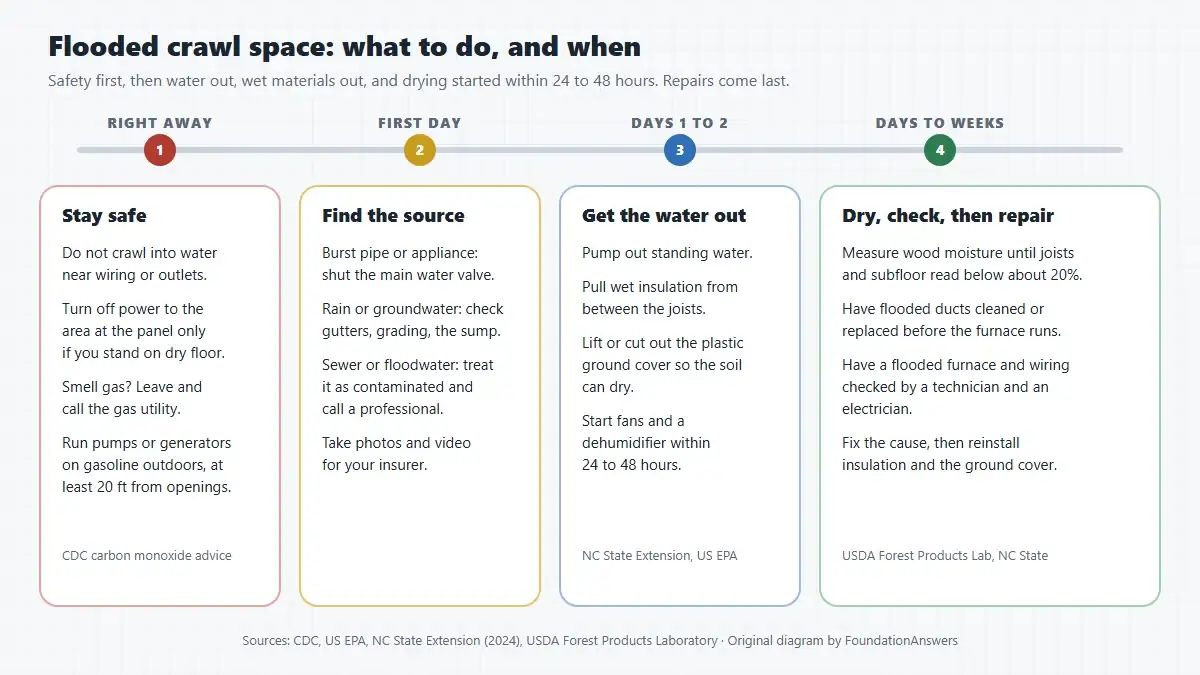
The flooded crawl space is a hazard before it is a repair job. Below I am sharing the dangers to deal with before anyone crawls in.
- Electricity: Wiring, junction boxes, outlets and appliances often sit in or near the water. NC State Extension advises having a flooded electrical system checked by an electrician, and not turning the power back on in a flooded area until the water is pumped out.
- Gas: A flooded furnace or water heater can have damaged controls. If you smell gas, leave the house and call the gas utility from outside.
- Carbon monoxide: The CDC says to run generators and gasoline pumps outdoors, at least 20 feet from doors, windows and vents, and to use a battery-powered carbon monoxide alarm.
- Contaminated water: Floodwater and sewage backups carry bacteria. Wear rubber boots and gloves, and leave contaminated water to a professional.
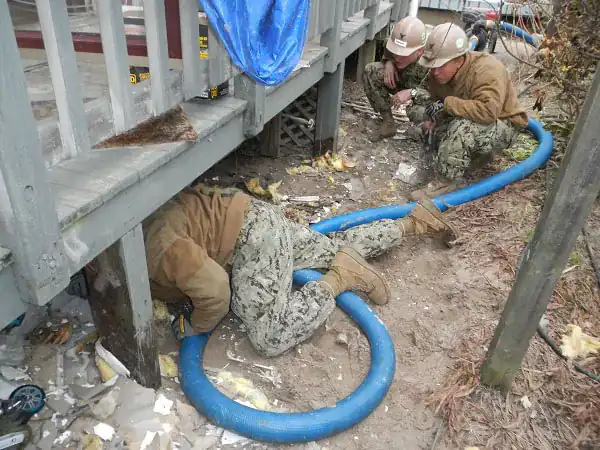
- The tight space itself: Crawling through mud, nails and debris in the dark, alone, is a risk. Tell someone where you are, and take a good light.
Where Did the Water Come From?
The source decides how urgent the job is, how clean the water is and what stops it happening again. Below I am sharing the usual sources in a table.
| Source | Clues | Water quality | First action |
|---|---|---|---|
| Burst or leaking supply pipe | Water in dry weather, hissing, high water bill | Clean | Shut the main water valve |
| Drain or sewer line leak | Sewage smell, water when fixtures run | Contaminated | Stop using fixtures; call a plumber |
| Failed sump pump | Pit full, pump silent or running nonstop | Usually clean groundwater | Restore the pump or rent one |
| Rain runoff | Water after storms, near downspouts | Muddy, usually low risk | Extend downspouts, check grading |
| High groundwater | Water rises up through the soil floor | Usually clean | Drainage and a sump pump |
| River or storm flood | Flood outside the house | Contaminated | Wait for water to recede; call a professional |
As the table shows, the water quality depends on the source. Clean water from a supply pipe is the easiest to deal with, while sewage and floodwater call for protective gear and professional cleanup. If the pump in your pit failed, our guide to a sump pump that is not working walks through the checks in order.
How to Get the Water Out of a Crawl Space
Once the area is safe and the source has stopped, the water needs to come out quickly. Below I am sharing the steps.
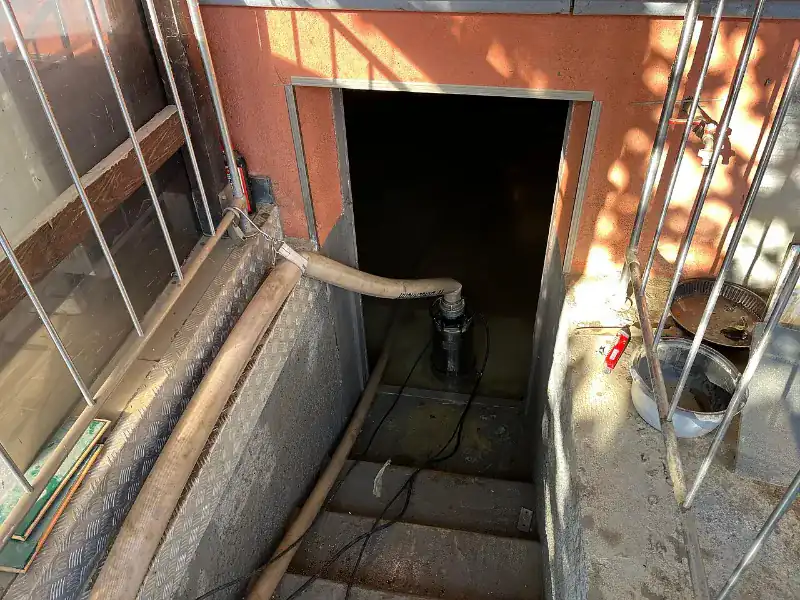
- Pump the standing water: A submersible utility pump with a hose run outside works for most crawl spaces. Discharge the water well away from the foundation so it does not run straight back in.
- Watch the water outside: If floodwater still surrounds the house, NC State Extension advises pumping about a third of the water each day. Emptying a space too fast while the soil outside is saturated can let water pressure push on the foundation walls.
- Use a wet vacuum for the rest: Pumps leave an inch or two behind. A wet vacuum picks up the puddles in low spots.
- Take photos and video: Record the water line, the damage and the source before anything is removed, for your insurer.

What to Keep and What to Replace
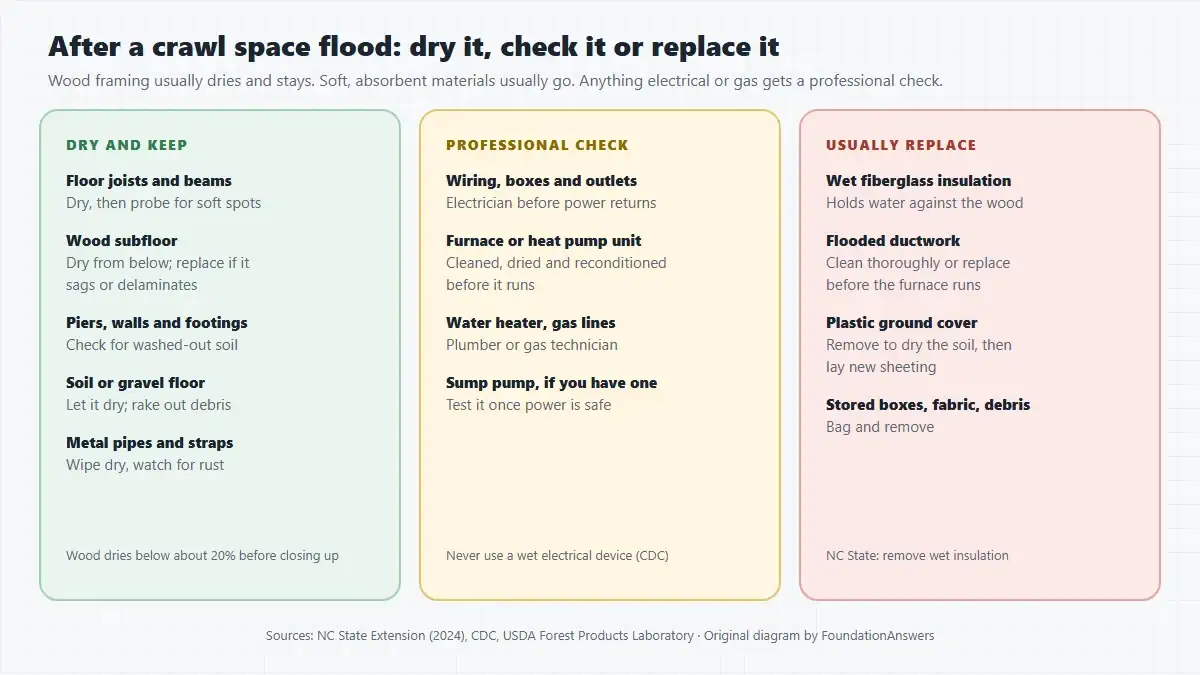
Not everything under the house is ruined. Below I am sharing what to do with each part.
- Wet insulation: Remove it. NC State Extension says to remove wet insulation, because batts between the joists hold water against the wood and the subfloor for weeks.
- Flooded ductwork: NC State Extension says ductwork that has been flooded must be thoroughly cleaned or replaced before the furnace runs. Flexible ducts with insulation are usually replaced.
- Furnace or heat pump: Have a flooded unit cleaned, dried and reconditioned by a technician before you turn it on.
- Wiring and electrical boxes: Have an electrician check them before power returns to the area.
- Plastic ground cover: Lift or cut it out so the soil can dry, then lay new sheeting once the space is dry.
- Joists, beams and subfloor: Keep them. Wood framing usually survives a flood if it dries quickly. Replace only pieces that are soft, sagging or separating.
How to Dry a Flooded Crawl Space
Drying is where most crawl space floods go wrong. The US EPA says to dry water-damaged areas within 24 to 48 hours to prevent mold growth. Below I am sharing the drying steps in order.
- Open the space to air: With the insulation and ground cover out, the wood and soil can release their water.
- Move air across the wood: Point fans along the joists and under the subfloor. Moving air carries moisture away from wet surfaces.
- Pull the moisture out: Run a dehumidifier sized for the space, drained to a sump, a floor drain or outside so it never stops when full.
- Close the vents in humid weather: Warm, humid outdoor air slows drying. Open the vents only when the outside air is drier.
- Measure the wood: Check the joists and subfloor with a moisture meter every day or two. A USDA Forest Products Laboratory review found that wood decay needs moisture content above about 20%, so keep drying until the readings fall below that.

Watch for mold as the space dries. A few spots on the wood are common and cleanable; widespread growth needs a plan. Our guide to crawl space mold covers the size limits for doing it yourself and the protective gear to wear.
Flooded Crawl Space Cleanup Cost
The cost depends mostly on the water quality and how much has to be replaced. Below I am sharing typical national prices in a table.
| Item | Typical cost |
|---|---|
| Water damage restoration, average | $3,000 |
| Most jobs | $1,200–$5,000 |
| Water extraction, clean water | $3.75–$4.25 per sq ft |
| Water extraction, gray water | $4.10–$6.50 per sq ft |
| Water extraction, sewage water | $7.00–$7.50 per sq ft |
| Crawl space mold remediation | $500–$2,000 |
As the table shows, the dirtier the water, the higher the price per square foot. Restoration figures come from Fixr's water damage restoration guide and the mold figure from its mold remediation guide (updated January 2025 and August 2025). New insulation, a new ground cover, duct replacement and any drainage fix are extra.
Example: Suppose a burst supply pipe floods a 1,000 sq ft crawl space with clean water. Extraction at $3.75 to $4.25 per square foot works out to about $3,750 to $4,250. If a failed sewer line had flooded it instead, the same area at $7.00 to $7.50 per square foot would cost about $7,000 to $7,500, before any replacement materials.
Does Insurance Cover a Flooded Crawl Space?
It depends on where the water came from. Below I am explaining the usual pattern.
- Burst pipe or appliance leak: Policygenius reports that standard homeowners policies often cover sudden, accidental water damage, but not slow leaks or poor maintenance.
- Sump pump failure: Often excluded unless you bought a water backup or sump pump failure endorsement.
- River or storm flood: Standard homeowners policies usually exclude it. A National Flood Insurance Program policy covers it, but FEMA says rooms not fully below ground, including crawl spaces, may still count as basements, where coverage is limited to listed items such as furnaces, water heaters and sump pumps.
Report the damage quickly, keep the photos, and keep receipts for pumps, fans and dehumidifiers you rent or buy.
So, What Should You Do Next?
The right next step depends on what flooded the crawl space.
- If a supply pipe burst: Shut the water, pump it out, pull the wet insulation and start drying today. Call your insurer.
- If it floods after heavy rain: Dry it, then fix the gutters, downspouts and grading before the next storm. Our guide to moisture in a crawl space explains the drainage fixes in order of cost.
- If the sump pump failed: Restore the pump, add a backup and test it before each wet season.
- If sewage or floodwater got in: Hire a professional for cleanup, and replace everything absorbent it touched.
- If ducts, the furnace or wiring were under water: Keep them off until a technician and an electrician have checked them.
Common Mistakes to Avoid After a Crawl Space Flood
- Crawling into water near live wiring: Turn off power from a dry spot first, or wait for an electrician.
- Running a generator or gas pump near the house: Carbon monoxide can kill. Keep it at least 20 feet from openings.
- Leaving wet insulation in place: It holds water against the wood long after the floor dries.
- Running the furnace through flooded ducts: It blows contaminated, damp air into the house.
- Closing up too soon: New insulation over wet wood traps the moisture. Measure first.
- Fixing the damage but not the cause: The next storm brings the next flood.
Conclusion
A flooded crawl space is urgent but usually fixable. Stay safe around wiring and gas, stop the source, and photograph the damage. Pump out the water, pull the wet insulation and ground cover, and start drying within 24 to 48 hours. Keep drying until the wood reads below about 20% moisture, have flooded ducts, the furnace and wiring checked, and only then reinstall insulation. Fix the cause so the next storm does not repeat it. For more help under the house, browse our practical guides for wet and flooded crawl spaces.
Frequently Asked Questions
-
What should I do first if my crawl space is flooded?
Stay out of the water if wiring, outlets or appliances are in it. Turn off power to the area at the panel only if you can stand on a dry floor, and leave the house and call the gas utility if you smell gas. Then find and stop the source, take photos for your insurer, and get the water pumped out so drying can start within 24 to 48 hours.
-
How long does it take a crawl space to dry out after a flood?
There is no fixed time. With the water pumped out, wet insulation removed and fans and a dehumidifier running, a crawl space flooded by clean water often dries in days to a few weeks. Soaked soil, cold weather and poor airflow slow it down. Measure instead of guessing: keep drying until the joists and subfloor read below about 20% moisture content.
-
How do I dry out a flooded crawl space?
Pump out the standing water, then remove wet insulation from between the joists and lift the plastic ground cover so the soil can dry. Run fans to move air across the wood and a dehumidifier to pull the moisture out of that air. Check the wood with a moisture meter every day or two, and do not reinstall insulation until the readings are low.
-
How much does it cost to fix a flooded crawl space?
Fixr puts water damage restoration at about $3,000 on average, with most jobs between $1,200 and $5,000. Water extraction runs about $3.75 to $4.25 per square foot for clean water and up to about $7.50 for sewage water. New insulation, a new ground cover, duct work, mold cleanup or a drainage fix add to that.
-
Is water in a crawl space after heavy rain normal?
A little dampness after a storm is common in older vented crawl spaces, but standing water is not normal. It means rain or groundwater is reaching the crawl space faster than it can drain, usually because of gutters, downspouts or grading that sends water toward the house. Fix the outside drainage first, and add interior drainage or a sump pump if water still collects.
-
Does flood insurance cover a flooded crawl space?
A National Flood Insurance Program policy may, but coverage below the floor is limited. FEMA says rooms not fully below ground, including crawl spaces, may still count as basements, where coverage is limited to listed building items such as furnaces, water heaters and sump pumps. Standard homeowners policies usually exclude flooding but may cover sudden water from a burst pipe.
Sources and Standards
- NC State Extension (S. Kirby), Priorities for cleanup and repair, revised March 27, 2024.
- CDC, Returning home after a flood, updated 2024.
- US EPA, A Brief Guide to Mold, Moisture and Your Home, updated February 18, 2026.
- Morris, P. I. and Winandy, J. E., USDA Forest Service, Forest Products Laboratory, Limiting conditions for decay in wood systems, 2002.
- FEMA, What Does Flood Insurance Cover in a Basement? fact sheet, January 2022.
- Fixr, water damage restoration cost, updated January 31, 2025.
- Fixr, mold remediation cost, updated August 29, 2025.
- Policygenius, Does homeowners insurance cover mold? (sudden versus gradual water damage, sump pump backups), updated May 2022.
This guide is general information and does not replace an on-site inspection by a qualified professional. Read our disclaimer.